Scientific Products
Marixia distributes selected materials from specialist scientific manufacturers. We coordinate international supply and work with trusted regional fulfilment partners to provide a straightforward and efficient route from quotation to delivery.

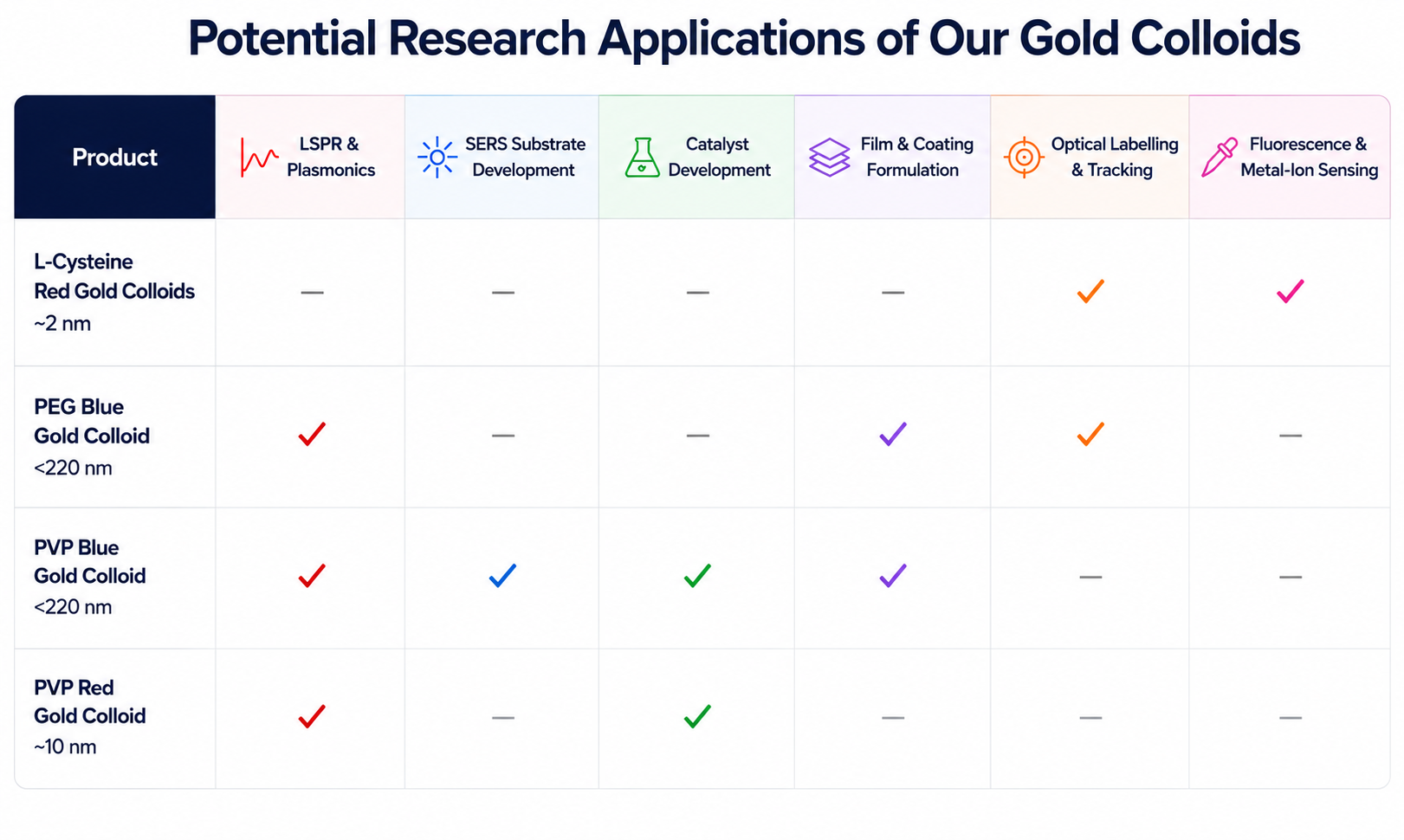
Marixia supplies a selected range of gold colloids developed by Grove Nanomaterials, a Swansea University spin-out specialising in colloidal nanoparticle technology. The range includes red and blue gold colloids with different particle morphologies and surface chemistries, intended for exploratory research in nanomaterials, optical sensing, bioassays and diagnostic development.
Please complete the below form to request a quote or further information.
L-Cysteine Red Gold Colloids
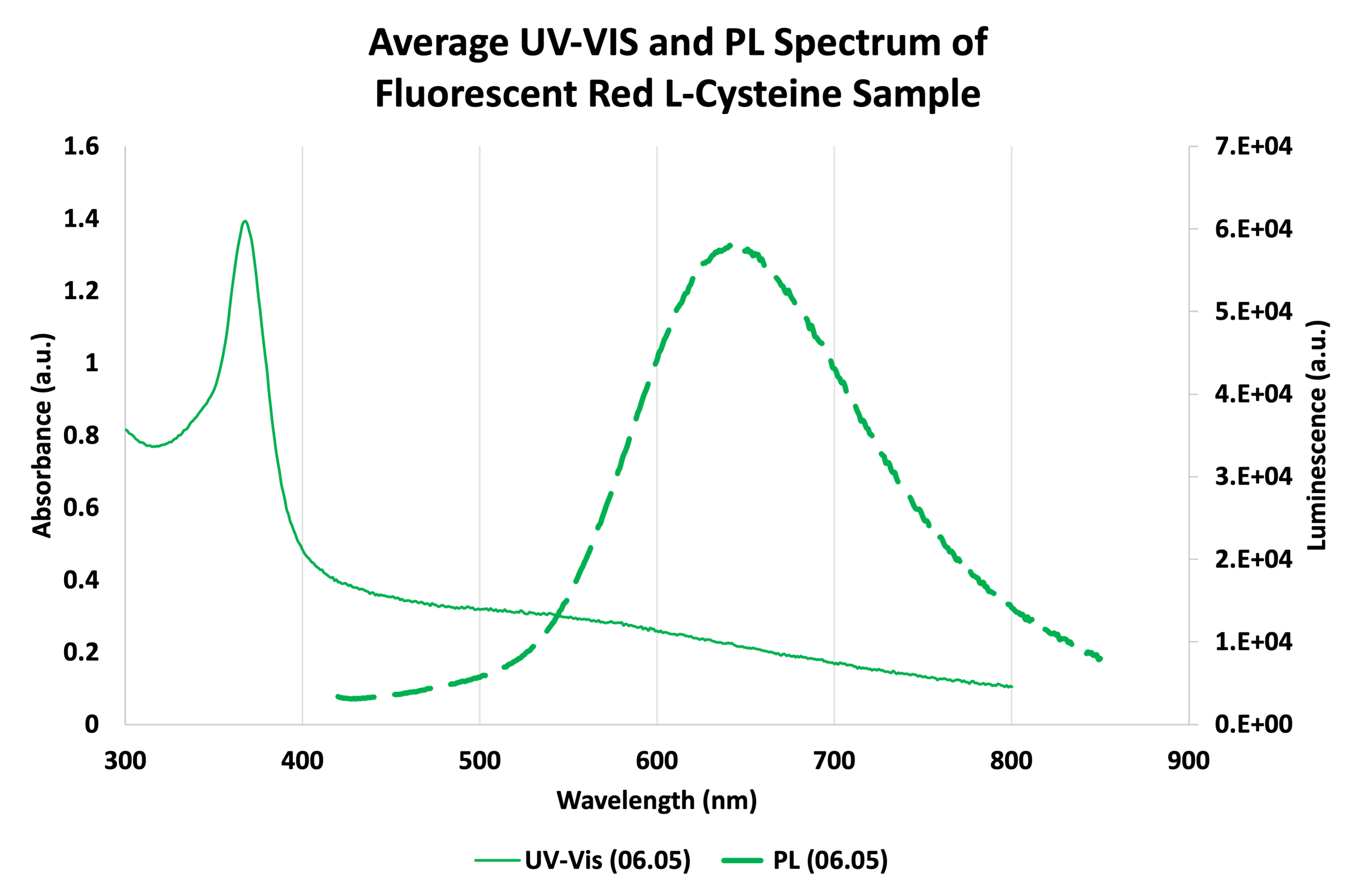
A luminescent, L-cysteine-functionalised gold colloid with a UV-Vis peak at 369 nm and red photoluminescence centred at 645 nm. Ideal for luminescent quantum-dot and fluorescence-focused research.
Technical details
Material: Gold colloid
Surface ligand: L-cysteine
UV-Vis peak: 369 nm
Photoluminescence peak: 645 nm
PEG Blue Gold Colloid
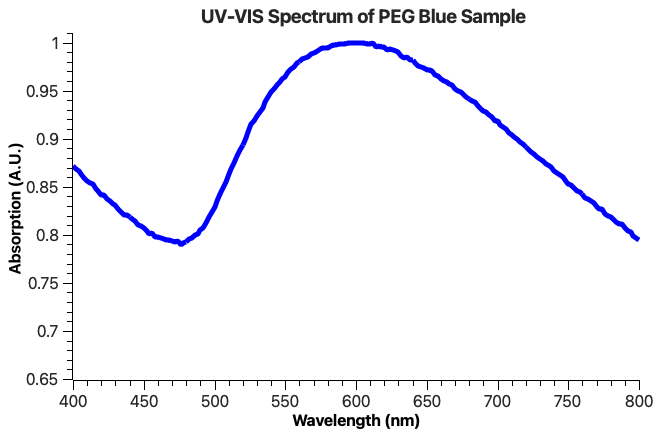
A PEG-functionalised gold colloid with a visible-region LSPR centred at 596 nm. A differentiated surface-chemistry option for plasmonics research.
Technical details
Material: Gold colloid
Surface ligand: PEG
LSPR peak: 596 nm
Peak standard deviation: 18 nm
PVP Blue Gold Colloid
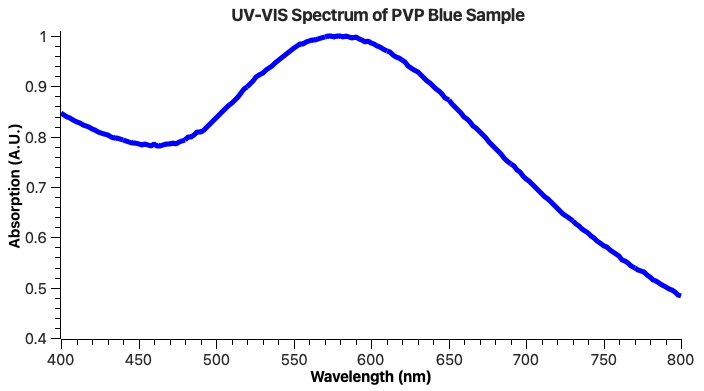
A PVP-stabilised gold platelet composite with a broad visible LSPR centred at 580 nm. A distinctive material for plasmonics, SERS, catalysis and electrocatalysis research.
Technical details
Material: Gold colloid
Surface ligand: PVP
Morphology: Platelet composite
LSPR peak: 580 nm
Peak standard deviation: 5.3 nm
FWHM: 126 nm
PVP Red Gold Colloid
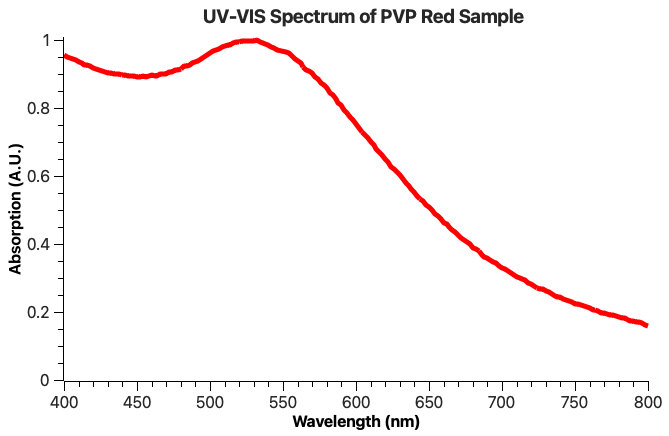
A compact, quasi-spherical PVP-stabilised gold colloid with an approximate 10 nm particle size and an LSPR peak at 526 nm. A versatile choice for plasmonics, catalysis and electrocatalysis research.
Technical details
Material: Gold colloid
Surface ligand: PVP
Morphology and size: Quasi-spherical; approximately 10 nm
LSPR peak: 526 nm
Peak standard deviation: 5.2 nm